
Do You Need a Fractional CRO or CMO?
Take our two minute Fractional Fit Check to see exactly where senior revenue leadership sharpens what you're already building, and which engagement model fits your stage right now.
Every framework Cojoy uses in client engagements is grounded in data. These white papers, case studies, and tools are built for revenue leaders at Series B+ who want to understand what is driving performance across the funnel before they start changing it.
Take our two minute Fractional Fit Check to see exactly where senior revenue leadership sharpens what you're already building, and which engagement model fits your stage right now.
Enter your metrics and see how your revenue engine compares against 2025 market data. It takes only 3 minutes.
The resources below cover the operational and strategic dimensions of revenue architecture. They are written for leaders who are already running a commercial operation and want a more precise understanding of where performance is being left on the table.
Strong top-of-funnel performance does not guarantee predictable revenue. In many Series B+ organizations, high volume at the top of the funnel masks conversion breakdowns further down, where misaligned reporting, inconsistent lead definitions, and disconnected team motions distort the true picture of funnel health. This paper examines where pipeline is typically lost after the first customer interaction, why those issues are routinely misread as volume problems, and how operational alignment across marketing, sales, and customer success restores revenue performance without increasing spend.
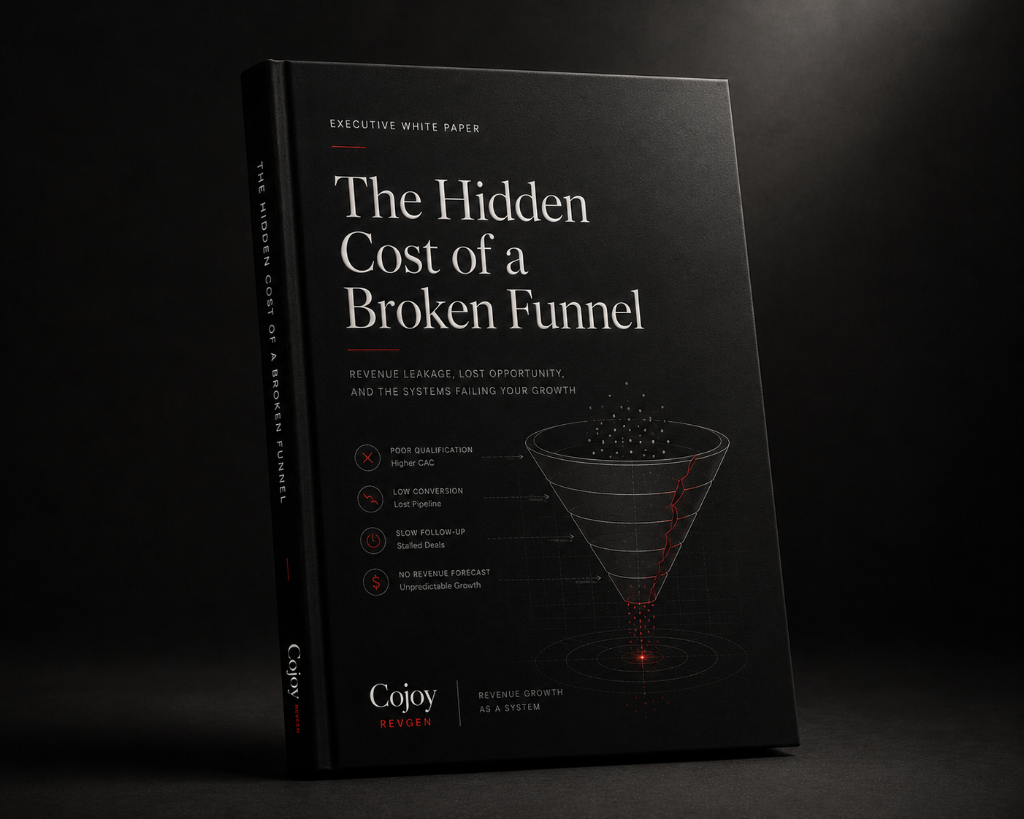
High demand does not always translate into predictable revenue. In many organizations, strong top-of-funnel performance masks deeper breakdowns in conversion mechanics, where misaligned reporting, inconsistent definitions, and disconnected teams distort visibility into the true health of the funnel. This case study explores where momentum is typically lost after the first customer interaction, why those issues are often mistaken for simple volume problems, and how operational alignment across marketing, sales, and customer success can restore revenue movement without increasing spend or pressure. Ultimately, it demonstrates why revenue itself is the only reliable signal of what is truly working across the lifecycle.
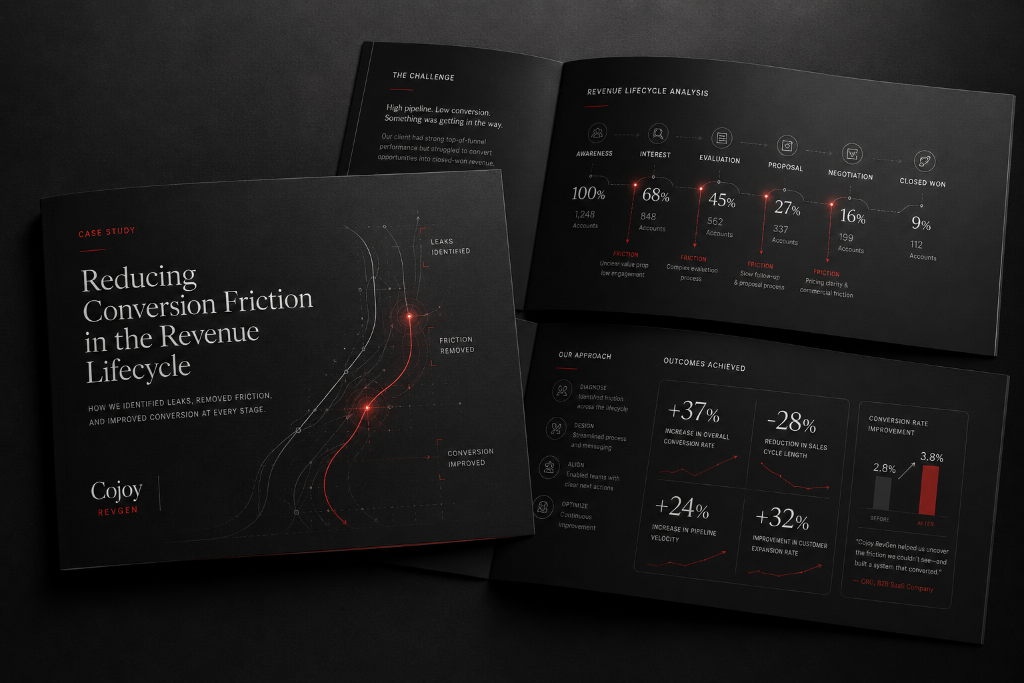
Sustainable revenue performance is driven by the strength of the system supporting the customer journey, not by incentive programs or increased pressure. This case study examines why conversion mechanics have a greater impact on revenue outcomes than short-term motivation strategies, how rigid GTM motions fail under real operational conditions, and how continuous learning across the lifecycle compounds over time into stronger alignment, better decision-making, and more scalable growth.
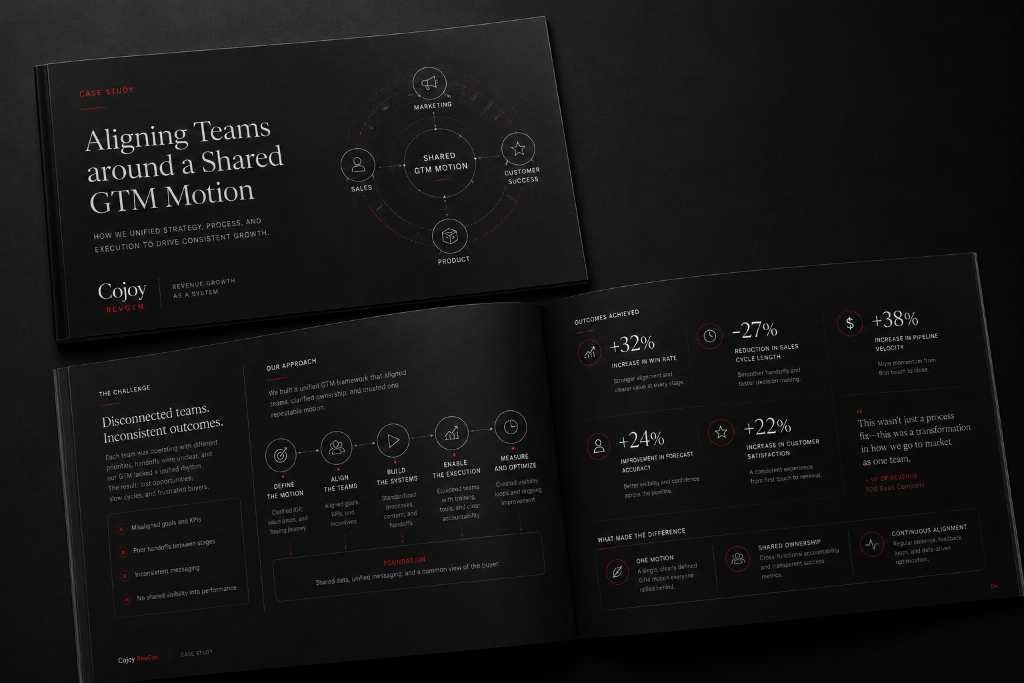
Series B companies frequently experience conversion plateaus despite strong brand awareness and healthy early-stage intent signals. In most cases the issue is not messaging or channel performance. It is GTM system design that creates misalignment across the customer lifecycle. This case study examines how aligning product, marketing, sales, and customer success around a single shared GTM motion improves conversion pathways and restores pipeline performance without increasing spend or organizational pressure.
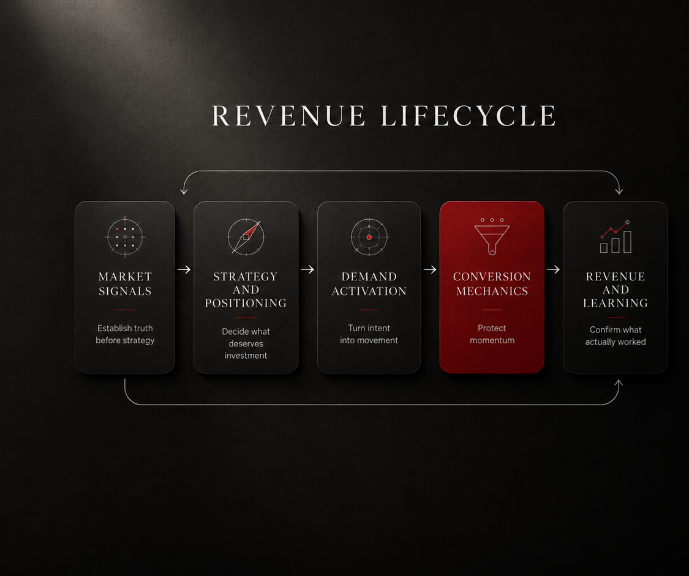
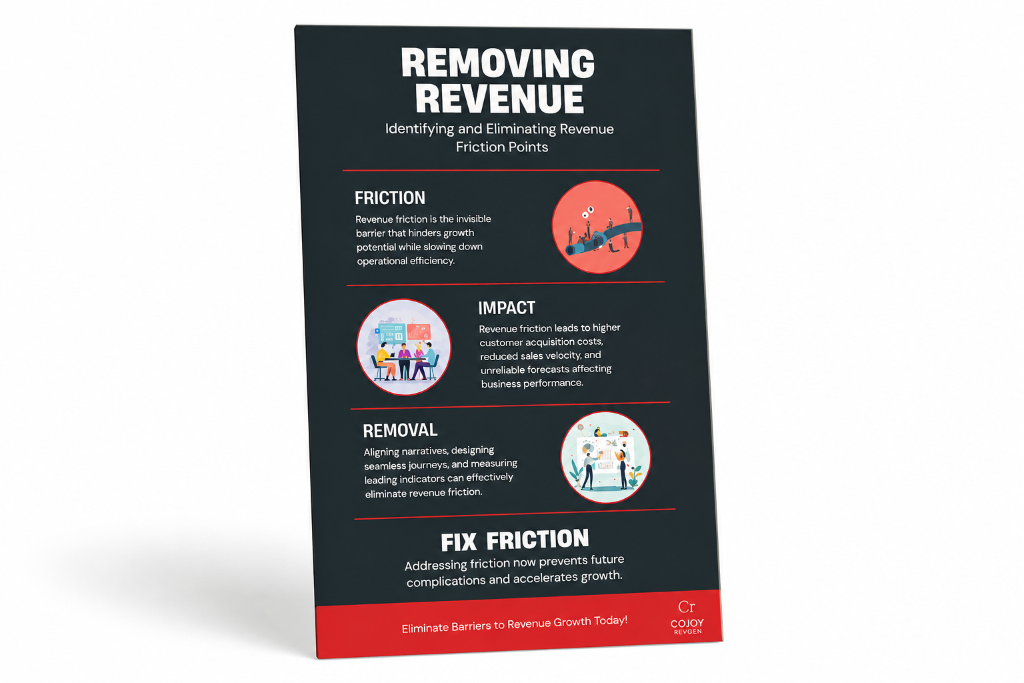
A visual guide to the most common performance gaps across the revenue lifecycle, mapped to the stage of the funnel where they occur and the operational changes that address them.
The patterns in these resources show up consistently across Series B+, PE-backed, and VC-backed organizations. If you recognize your funnel in any of them, the next step is a conversation about what your revenue architecture looks like today and where the highest-leverage opportunity is.